A working-through of hybrid geometry charts, what separates one price tier of components from the next, and the running costs that turn up long after the purchase.
The price on the tag buys a rolling frame with gears and brakes. It does not buy the things that make the bike useful in November, or the things that wear out quietly and then all at once. A careful reader works out the second number before signing off on the first, because the second number is larger than most people expect and arrives in awkward installments. What follows is the shape of that spending over five years of riding through all four seasons, and where the labor is worth paying for.
1. The carrying problem, solved once
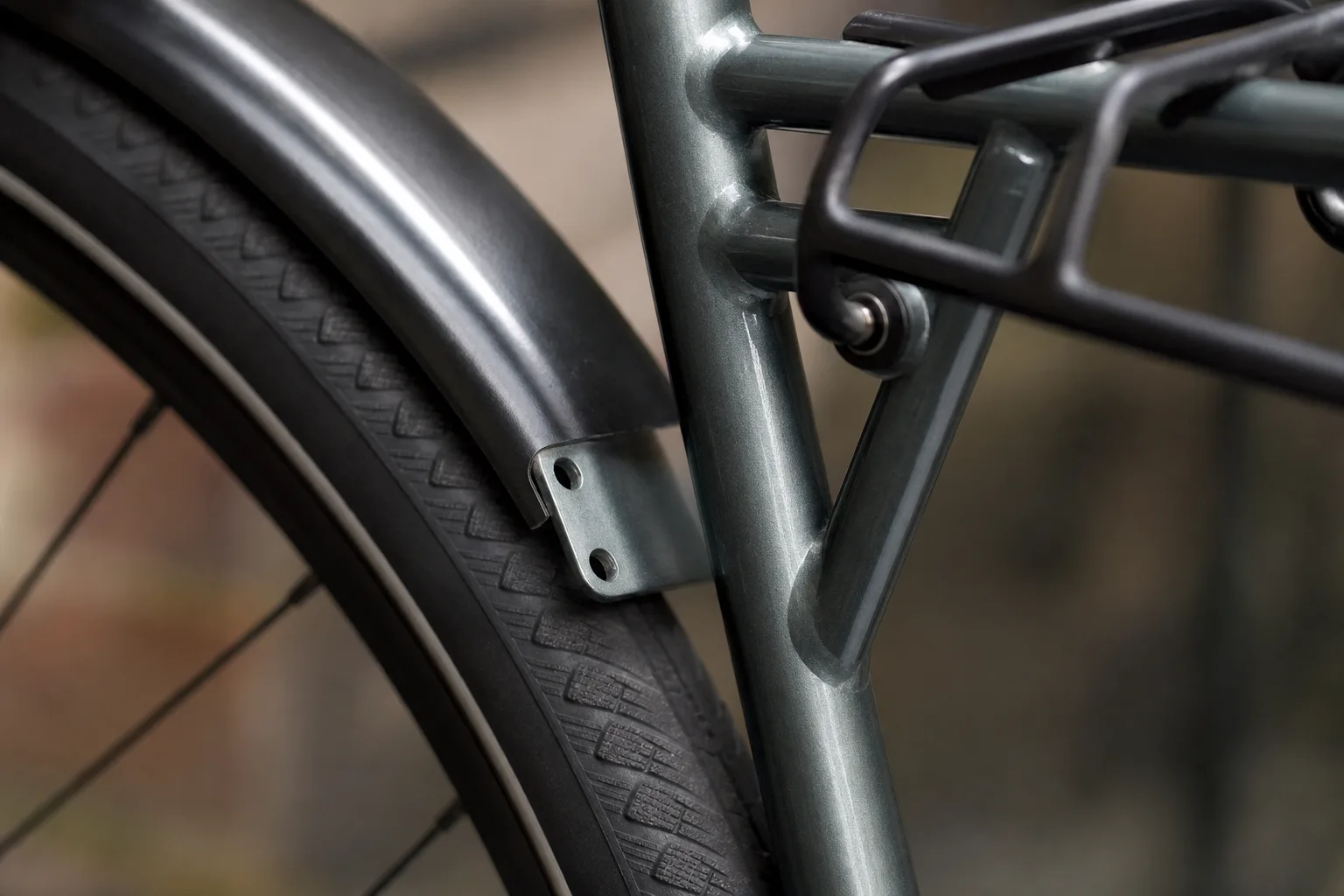
A rear rack and a pannier cost less than a year of the back pain a loaded backpack produces, and they change what the bike is for. The thing to check before buying is whether the frame has eyelets at the dropouts and near the seatstays, because a bike without them needs clamp-on hardware that works but rattles. Racks are rated for a load, that rating is printed on them, and it is worth reading. One good aluminum rack outlasts several bikes.
2. Mudguards, which are cheap and change the calendar
Full-length fenders with mudflaps are the difference between a bike you ride in wet weather and a bike you look at during wet weather. Clip-on versions are better than nothing and worse than the real thing. Check tire clearance and the presence of a brake bridge before ordering: a frame designed for fenders takes twenty minutes to fit, a frame that was not takes an afternoon and some improvisation. Fenders also cut the grit that grinds through drivetrains, which pushes the wear items further apart.
3. Lights, and the difference between seeing and being seen
Rechargeable USB lights are the default and they are fine, provided you accept that you will forget to charge them, probably in December. A dynamo hub built into the front wheel removes the decision entirely and costs roughly what a decent wheel plus a decent light set costs, which is to say it is not the extravagance it sounds like. The Consumer Product Safety Commission is responsible for the federal requirements covering reflectors on new bicycles sold in the United States. Reflectors are a floor, not a lighting plan.
4. A lock that is heavier than you want it to be
Locks are sold by security rating, and the honest way to shop is to decide what the bike is worth to a thief, then buy a lock rated for the neighborhood rather than for your optimism. A serious U-lock weighs enough to notice on every ride, which is the point. Budget for two locks if the bike lives outdoors overnight, and for a bike that is deliberately unremarkable. Registering the serial number with a national database costs nothing and occasionally works.
5. Storage, which is a real line item
Indoors is cheaper in every sense: less corrosion, fewer seized cables, no cover flapping in the wind. A wall hook or a floor stand in a hallway is a small one-time cost that pays back in components not replaced. Outdoors means a lockable shed or a well-anchored ground anchor, plus a breathable cover, and it means accepting that the drivetrain will need more attention. Apartment dwellers should check the lease and the building's bike room policy before assuming either option exists.
6. What wears out, and roughly when
Over five years of year-round riding, expect several sets of brake pads, at least two or three chains if you replace them before they stretch, one or two cassettes, a couple of sets of tires, new cables and housing, fresh bar tape or grips, and at least one wheel rebuild or replacement if the roads are bad. Chains are the leverage point: a cheap chain checker and the habit of using it monthly turns an expensive cassette replacement into a routine, inexpensive swap.
7. Which jobs to learn, and which to hand over
Learn to fix a flat, adjust brake pads, index a rear derailleur, clean and lube a chain, and check chain wear. Those five skills cover most of what goes wrong and cost about the price of a shop visit in tools. Pay a mechanic for wheel building and truing, bottom bracket and headset work, hydraulic brake bleeds, and the annual once-over where someone competent finds the thing you stopped noticing. A yearly service, priced at a shop's standard tune-up rate, is the cheapest insurance available.
Add it up honestly and the accessories, storage and consumables over five years often approach the purchase price of a mid-range bike. That is not an argument against buying one. It is an argument for asking the shop, at the counter, what the fenders and rack will cost fitted, and for putting that answer next to the number on the tag.